
Baby acne and spots: what can you do about them?
Acne and spots are generally associated with puberty. Which teenager doesn’t suffer from them? Some more than others; few teenagers get through this period spot-free. But did you know that lots of babies also suffer from acne and spots? We also call it baby acne.
What is baby acne?
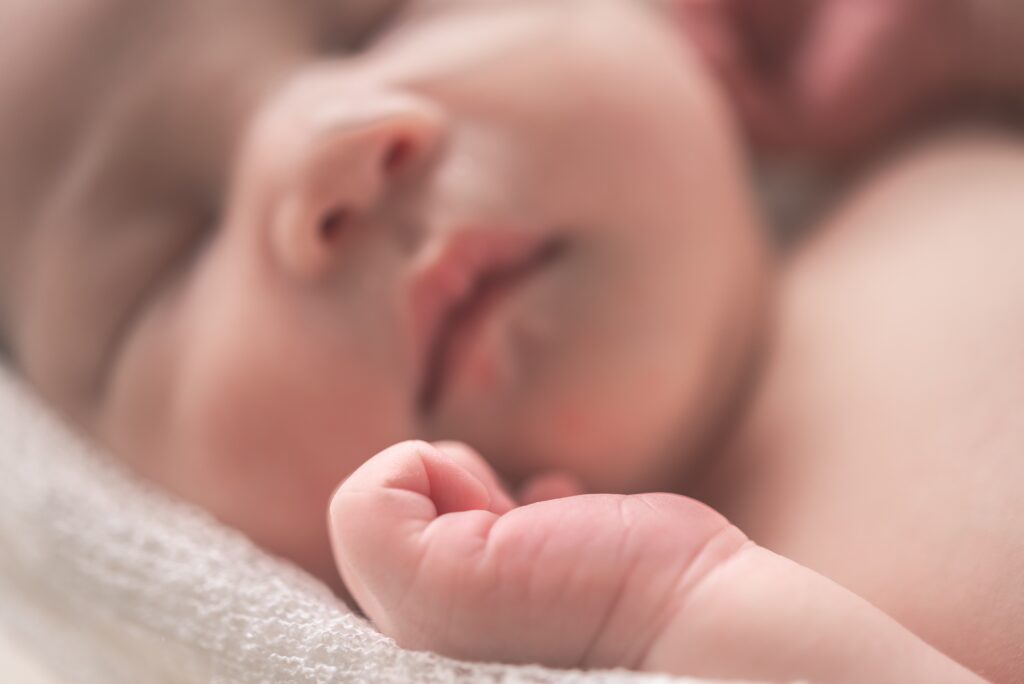
Baby acne looks a lot like teenage spots. It consists of small red spots and bumps, sometimes with blackheads, on your baby’s face. You mostly see them on the cheeks, nose, chin and forehead. It is common: around 1 in 5 newborns has it. Fortunately, the spots are harmless and temporary.
How does baby acne develop?
There are two forms, which you can mainly tell apart by when they appear:
- Spots in the first few days after birth are called erythema neonatorum toxicum (ENT). The cause is unknown. It is clear, however, that there is no link with feeding, allergies or care products. ENT usually disappears within about a week.
- Spots that appear 2 to 4 weeks after birth are called acne neonatorum, or true baby acne. This develops because the sebaceous glands are temporarily more active, under the influence of hormones passed on during pregnancy. The spots can come and go and usually clear up by themselves within a few weeks to a few months.
In other words, the cause of spots that appear straight after birth is unknown. Spots that appear 2 to 4 weeks after birth are caused by hormones passed on during pregnancy.
What can you do about baby acne?
To be honest: nothing. And that is also the wisest thing to do. Your baby doesn’t need any special treatment. What you can do is care for the skin gently and, above all, leave things alone.
What helps:
- Gently dab the skin clean with lukewarm water. The Petit&Jolie konjac sponge is very suitable for this. It contains no (baby) shampoo, fragrance or preservatives and is naturally very soft.
- Then pat the skin dry. Don’t rub or scrub, as this makes the skin more likely to be damaged.
- Keep your baby’s nails short, so that if your little one does scratch, it causes less damage.
What you’d better not do:
- Scratch, pick or squeeze. This can make the spots inflamed and irritate the skin even more, which is exactly what you want to avoid. Squeezing can also cause scarring.
- Use products for teenage spots. They are not suitable for a baby’s skin.
What if a spot becomes inflamed?
That can happen and is not immediately harmful. Once again, the motto is: keep the skin clean. But it can of course always happen that the skin becomes red and irritated. You can then apply a small amount of calendula balm. If the inflammation hasn’t cleared up after a few days, contact your GP.
When should you see your GP?
Contact your GP or child health clinic if:
- the spots become larger than 3 millimetres;
- you see yellow crusts around the nose and mouth, or blisters filled with fluid;
- the acne is severe or lasts a long time;
- you are unsure whether it is baby acne at all.
Good to know
In most cases, baby acne clears up by itself. This can be after a few days, but sometimes it takes several months. So there really is no reason to worry. It may not look great in photos, but if that’s all it is, it’s hardly a problem, is it?
If you have any questions, please don’t hesitate to email us at info@petitetjolie.nl